
CONTRIBUTIONS
Teamleader for the project
Point of contact between the employer and project group
Environment layout and pacing
Challenge progression and balancing
UI animation scripting in Unity
Player control systems
Integration of visual elements with functionality
Leading scrum meetings with the programming team
Coordinating workflow and development priorities
Music composition and implementation
Sound effects design and integration
Audio system management in Unity
Difficulty balancing
Controller functionality implementation


INTRO
CHALLENGES & SOLUTIONS
1UP RELOADED


1UP RELOADED is a sidescrolling platform game for children, inspired by the dance show of the same name by the dance collective Arkeolog 8. In 1UP RELOADED you play as different dancers while fighting through treacherous terrain to collect points and reach the end.
The project group consisted of four students who studied their final year of Game development at Södertörn University in Sweden. During the programme's last few months we had the pleasure of developing a game for our internship. The team was composed of two graphical artists and two designers who during the course of 10 weeks worked together to develop 1UP RELOADED.
About the dance group Arkeolog 8: https://www.arkeolog8.se/
Link to the game: https://meimoknom.itch.io/game
One of the primary challenges was designing a cohesive game that spans four distinctly different levels, each with unique mechanics, while maintaining a consistent feel and shared systems. Managing persistent states across scenes — including health, inventory, points, and audio required building robust manager systems using Unity's DontDestroyOnLoad pattern, ensuring data integrity between level transitions without breaking existing functionality.
A significant technical challenge was the audio architecture. Each level introduced new sound requirements, from proximity-based black hole ambience and underwater soundscapes to spaceship engines and roller coaster mechanics. Building a scalable SoundManager that handled one-shot effects, looping sources, proximity-based volume, pause functionality, and slider-controlled volume across all scenes in just 10 weeks required careful planning and frequent iteration to avoid conflicts between audio sources.
F O M A L H A U T

CONTRIBUTIONS
Environment layout and pacing
Challenge progression and balancing
UI animation scripting in Unity
Player control systems
Integration of visual elements with functionality
Leading scrum meetings with the programming team
Coordinating workflow and development priorities
Music composition and implementation
Sound effects design and integration
Audio system management in Unity
CHALLENGES & SOLUTIONS
Since the game is fundamentally a 2D platformer with 3D graphics, it was challenging to create interesting puzzles without utilizing the full possibilities of 3D space. Many initial ideas didn't work because we were limited to 2D mechanics, and it can be difficult to make a 2D platformer engaging with compelling mechanics, especially for a puzzle-focused game.
We solved this through an iterative design process, experimenting with different gameplay concepts before landing on the transformation mechanic. This opened up new possibilities for puzzle design, as each animal form provided the player with unique abilities.
Through continuous testing and refinement, we developed varied challenges that leveraged these different forms, allowing us to maintain player engagement despite the 2D constraints. This core mechanic became the foundation for designing diverse and interesting puzzles throughout the game.
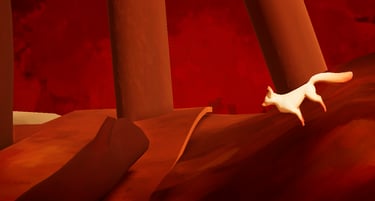
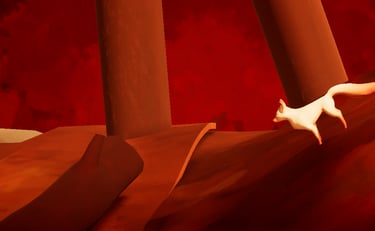
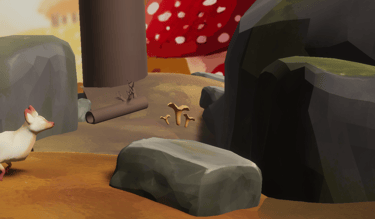
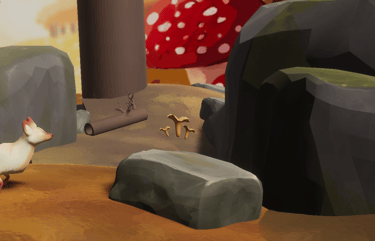
Fomalhaut is a magical 2.5D platformer about a fallen star finding its way back to the night sky. After crash-landing on Earth, the star discovers it can absorb the essence of animals, taking on their forms and abilities to overcome challenges on its journey home.
The game combines 3D visuals with 2D platforming mechanics, creating a puzzle-focused experience centered around transformation. Players must strategically switch between different animal forms each with unique abilities to navigate environments and solve challenges. The fox can wall-jump to reach new heights, the bear pushes heavy objects, and the bird soars across gaps, encouraging creative problem solving throughout the journey.
Developed as part of a medium scale university course, the project brought together a team of 4 designers and 8 artists. We used P4V for version control to collaborate effectively throughout development. The game was released as a demo on itch.io, showcasing our team's effort in creating an atmospheric and mechanically engaging platformer.
INTRO
CONTRIBUTIONS
CHALLENGES & SOLUTIONS
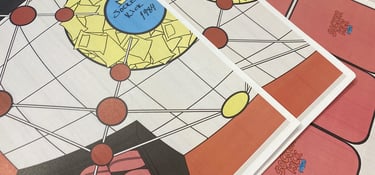
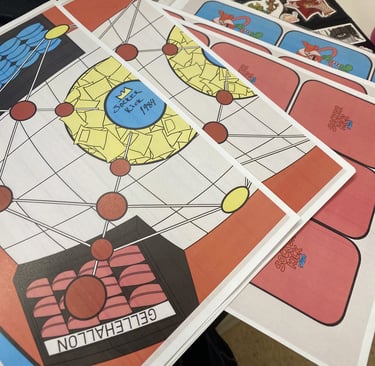
Sockerkick is an analog board game designed for future release at Akademibokhandeln. The game is based on a significant moment in Swedish history when self-service candy was introduced in 1984, allowing customers to pick their own sweets instead of waiting for staff behind the counter.
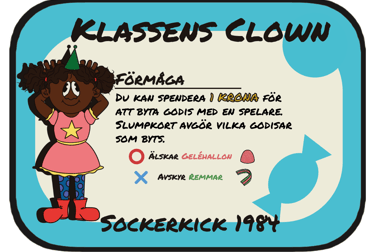
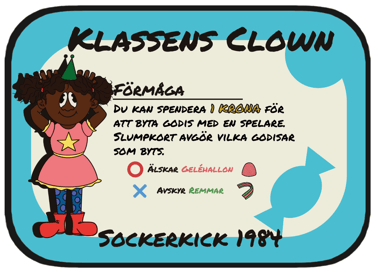
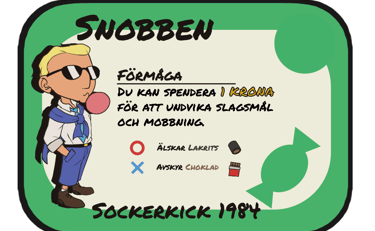
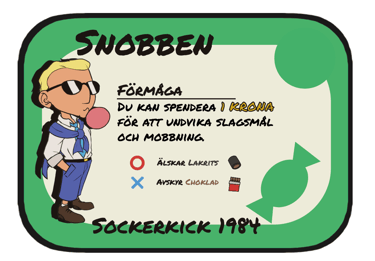
Players compete to collect the most candy (points) across the game board before their opponents. The game features power cards that players must navigate strategically, adding layers of decision making to each turn. Each player takes on a unique character with specific strengths and weaknesses toward different types of candy and other players, creating asymmetric gameplay and requiring adaptive strategies.
Developed as part of a university course in the span of 4 weeks where the group assignment was to create a board game based on a historical event, this project taught me analog game design principles that translated valuable lessons applicable to digital game development.
Working with board game design presented unique challenges, as it felt almost like working in an entirely new medium. Unlike digital games where mechanics can be iterated quickly through code and design options are implemented through different technical means, analog design required careful planning and physical testing to ensure engaging gameplay.
The primary challenge was creating a game that remained interesting and fun throughout its playtime. We solved this through combining multiple mechanics that we had found enjoyable in other games, creating a synergy between different systems. We designed a board with various spaces containing different types of candy that players collect for points, giving players strategic choices about movement and collection routes.
To add tension and player interaction, we implemented a battle system triggered when two players landed on the same space. This allowed players to compete for each other's collected candy points, transforming what could have been a simple race into a more dynamic competitive experience. The character asymmetry where each player had unique strengths and weaknesses toward different candy types further deepened the strategic layer, ensuring that no two games felt the same.
Through playtesting and iteration, we balanced these mechanics to maintain engagement while keeping the game accessible for families and casual players. This process taught me valuable lessons about core gameplay loops and player interaction that translate directly to digital game design.
Board layout and space design
Character design and asymmetric abilities
Rule creation and balancing
Conducted multiple playtesting sessions
Iterated on mechanics based on feedback
Designed AI opponent for solo play
INTRO
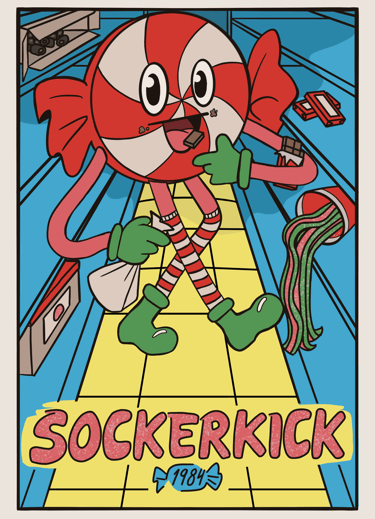
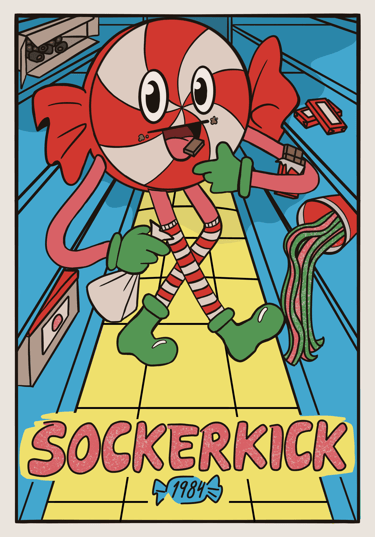
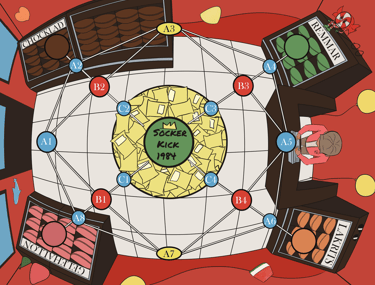
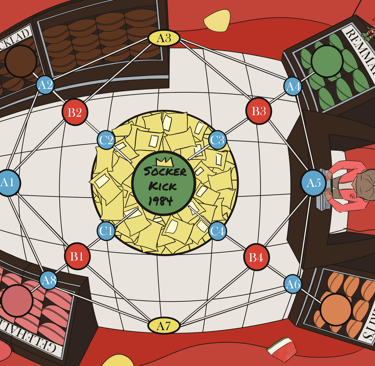
S O C K E R K I C K
T H E F I S H A N D G E R O
INTRO
CONTRIBUTIONS
CHALLANGES & SOLUTIONS
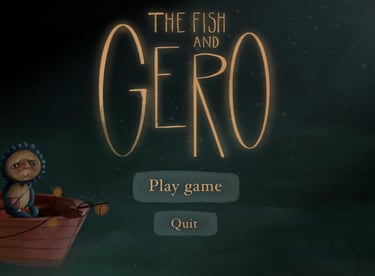
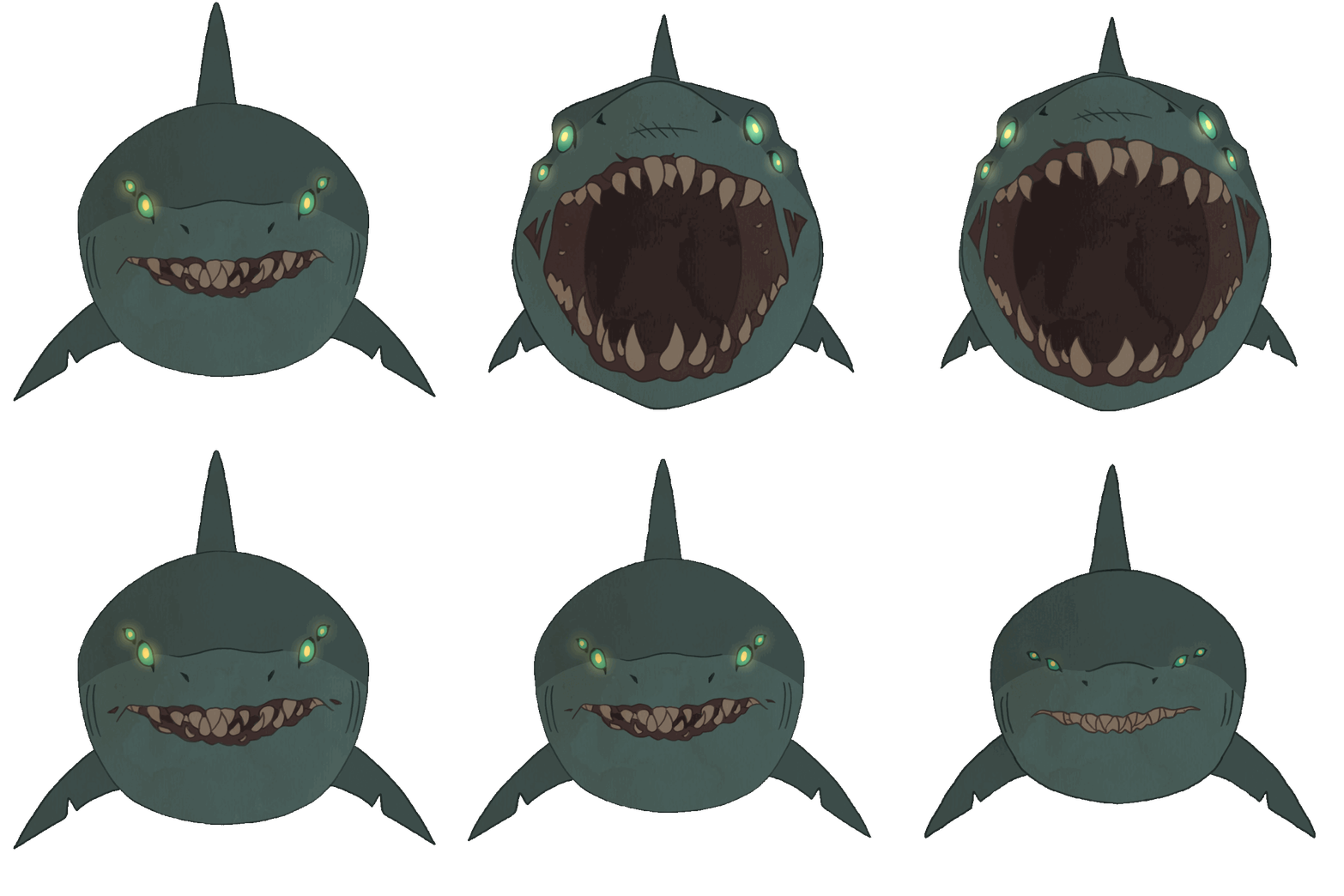
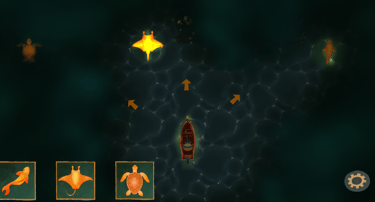
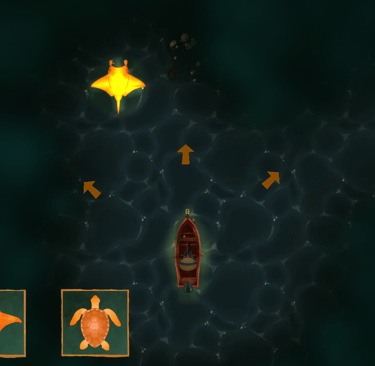
A 2D survival game where players navigate through thick fog in a small boat, with limited visibility of what lies ahead and a goal to make it home. Players must choose between three paths—left, center, or right with deadly sharks lurking in the wrong directions.
To aid navigation, players have three glowing fish that can be deployed as scouts. By clicking on a fish and selecting a direction, players send it ahead to reveal safe passages. This risk-reward mechanic aims to create tension as players must decide when to use their limited scouts and when to trust their instincts. One wrong choice means a deadly encounter with a shark.
Developed as part of an early stage university project with a very limited timeframe, this game served as an introduction to creating focused minigame experiences. The tight development window taught valuable lessons about scope management, core gameplay loops, and delivering a complete experience within strict constraints.
The main technical challenge was implementing the fish movement system. Getting one fish to move to a clicked position worked initially, but when we tried to apply the same logic to multiple fish, conflicts arose between different fish instances.
After researching various tutorials and experimenting with different approaches, we solved this by creating a fish controller system that properly tracked which fish was selected and managed their individual movements. The solution used raycasting to detect clicks on the ground layer and individual fish objects, then assigned the selected fish to move toward the clicked position using physics based movement. This separation of selection and movement logic ensured each fish could be controlled independently without interfering with the others.
This challenge taught me valuable lessons about object management, state handling, and the importance of separating concerns in code
Fish movement system implementation
Player movement mechanics
Animation integration and implementation
Music and audio integration
Leading scrum meetings with the team
Level design
U N T I T L E D F O X G A M E
INTRO
CONTRIBUTIONS
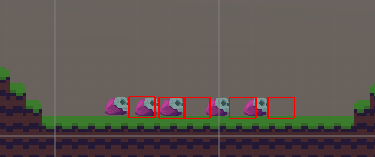
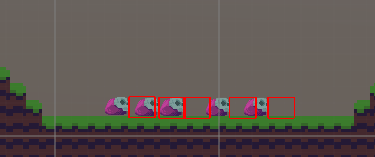
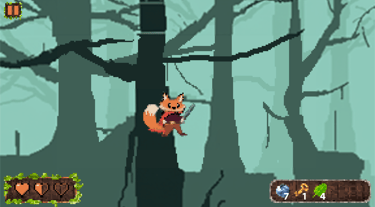
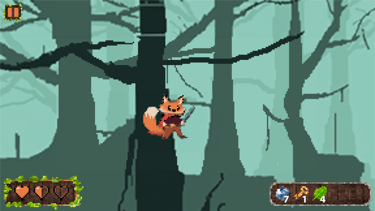
Untitled Fox Game is a 2D platformer and the first game I ever created, developed as part of my early university coursework. The assignment was to create a small-scale 2D platformer, introducing fundamental game development concepts and workflows.
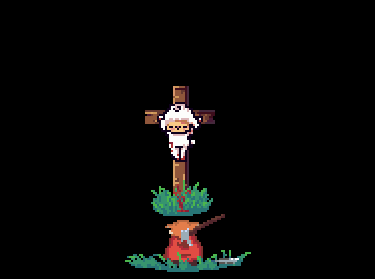
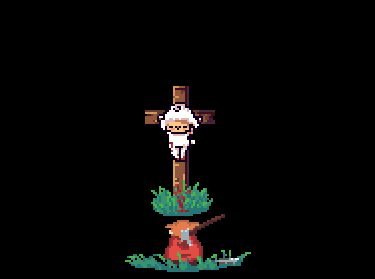
The game follows a small fox armed with a sword on a quest to rescue their best friend, a lamb, from purple monsters. Players navigate through platforming challenges while collecting keys to unlock doors and gathering power-up items that provide abilities like enhanced jumping. The core gameplay loop focuses on platforming precision, combat encounters, and exploration to progress through levels.
As my first complete game project, this experience established foundational skills in Unity, C# scripting, working with tilemaps and level design, and collaborative development.
CHALLANGES & SOLUTIONS
As my first game development project, the primary challenge was adapting to an entirely new field where everything was unfamiliar. Learning to navigate Unity's interface and workflow while simultaneously grasping game design theory created a steep learning curve. Additionally, collaborating effectively with other developers while still learning fundamental concepts added another layer of complexity.
I addressed these challenges through dedicated self-study and leveraging university resources. Reading documentation, watching tutorials, and learning from experienced instructors helped me build foundational knowledge in both the technical and theoretical aspects of game development.
Tilemap implementation and setup in Unity
Player movement script and controls
Level design and tile placement
Environment layout and platforming challenges